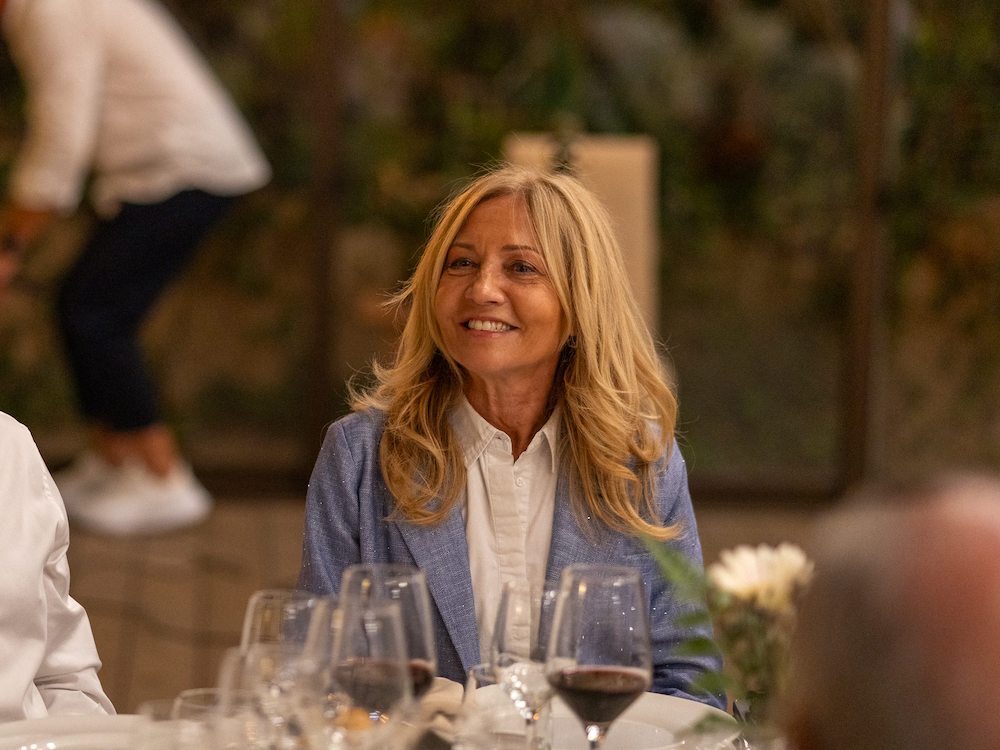
Born in Santa Cruz de Tenerife in 1965, Antonia Varela lives somewhere between the earth and the sky, unraveling the great mysteries that have fascinated humankind throughout the centuries. Brilliant and passionate, this Canary Islands astrophysicist, who has broken more than her fair share of glass ceilings, has been the Director of the Starlight Foundation of the Canary Islands Institute of Astrophysics for several years. There, she works to preserve the celestial heritage of the archipelago and advocates tirelessly for the economic and cultural importance of the skies for the Canary Islands. Despite the many challenges currently on the horizon, she remains optimistic and tenacious.
Varela’s biography is a story of passion and scientific vocation. She fell in love with the starry sky one summer on Mount La Esperanza, accompanied by the Asimov novel The Universe, and in subsequent years learned that “behind those bright dots there was physics, mathematics, and an immense universe to explore and understand.” Recipient of the Canary Islands Gold Medal, the Scientific Career Trajectory Award, the Más Mujer and Azul Zero awards, and included in the list of the 50+1 most influential people in the world in tourism, among other honors, her research has contributed valuable perspectives to her international scientific field and been published in prestigious journals including Science. We spoke with her about her work at the helm of the Starlight Foundation, about the challenges of conservation for destinations like Abama Resort, and about the role of women in science.
Your career is divided between research and outreach. Do you feel like more of a researcher or a teacher?
Research and teaching have been intertwined with my scientific career since the beginning. My first research experience came through two summer scholarships that allowed me to work at the Royal Greenwich Observatory and, shortly after that, at the newly inaugurated Canary Islands Institute of Astrophysics. I published my first scientific article while working on my doctoral thesis in extragalactic astrophysics.
But teaching has always been a constant in my life, even before I went to university. As a teenager, I began working as a private tutor to gain some financial independence, and I continued during my university years. One of my most memorable teaching experiences was at the University of La Laguna's University for Adults. I was able to confirm something I had always suspected: if you enjoy teaching, those who are learning will enjoy learning. Rigor and passion are the essential ingredients for sharing knowledge.
At the Starlight Foundation, I continue to wear both hats. On the one hand, I do applied research on sky quality and light pollution in places that are candidates for Starlight certification, conducting audits and technical reports. And I’m also dedicated to teaching and outreach, which are fundamental for professionalizing and defining the emerging sector of astrotourism. I have never been able, nor wanted, to choose between being a researcher and a teacher: they both define me and enrich each other.
You’ve directed the StartLight Foundation since 2009. What can you tell us about the organization during this time?
The Foundation has given me a broad perspective with which to continue exploring the skies. My task is to understand not only its scientific relevance, but also its enormous cultural and environmental value and its capacity to generate economic and social growth in local communities. That discovery has been fundamental in my career.
The Foundation has gone through two major stages. The first was its establishment, the design of its international certification system, and the creation of its training program, under the direction of its first director, Luis Martínez. The second, since my arrival, has seen the consolidation of the Starlight certification, its internationalization, and the strengthening of ties with the institutions that signed the La Palma Declaration.
In recent years, the Foundation’s growth has been exponential, both in terms of training and the territories covered, but we approach our work with tremendous prudence and humility in order to maintain the scientific rigor and quality required by our certification. Demand for certification has increased by more than 300%; we have quintupled the number of courses we offer; and the protected areas have expanded by more than 60%.
Among our most important milestones, I would highlight the creation, in 2019, of the first scientific astrotourism group among the affiliated members of UN Tourism, which will now publish the first international Astrotourism Guide, with case studies. It’s also very important that Starlight Certifications earn their recipients points in the Spanish government's sustainability and recovery plans. We hope other countries will also incorporate the Certification in similar ways.
So the skies can be a source of wealth for the Canary Islands?
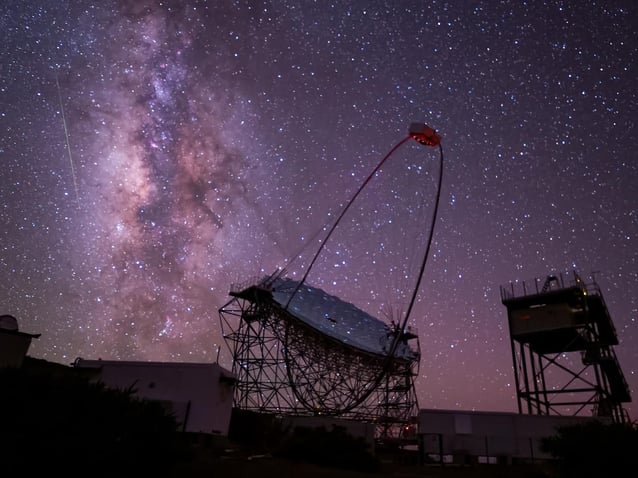
The Canary Islands have naturally privileged conditions for astronomic observation, and they are protected by one of the strictest sets of sky and atmosphere laws in the world. Thanks to this, the island of La Palma and the half of Tenerife that faces La Palma enjoy exceptional conditions. One of the remaining challenges is to extend the protections to the entire archipelago. At the Starlight Foundation, we are working precisely along these lines, promoting municipal ordinances for certified areas to regulate lighting and safeguard the skies and their associated heritage.
The Canary Islands' skies are a source of wealth in many dimensions. In addition to their scientific value and the archipelago’s two world-class observatories, they have enormous cultural, natural, and tourism value. The Canary Islands have become a veritable laboratory for astrotourism that is inspiring other territories. Today, we have more than 3,700 km² of Starlight-certified territory, and more than 10 Starlight Tourism Destinations and Reserves. Astrotourism is an emerging niche with great transformative potential: it increases overnight stays, deseasonalizes and decentralizes tourism, and is an antidote to depopulation because it generates employment and, above all, quality entrepreneurship. Astrotourists also tend to have medium-high cultural and economic levels, a marked environmental sensitivity, and great curiosity, even if they are not experts in astronomy. They come in families, as couples, and as solo travelers.
What is required to obtain Starlight accreditation?
The sine qua non condition for obtaining any Starlight accreditation is the quality of the sky, evaluated using very specific parameters: low background brightness (that is, little to no light pollution), good image sharpness and visibility, high atmospheric transparency, and a high number of clear nights annually.
Additionally, there are more than 300 astrotourism criteria, validated at the UN Tourism headquarters in 2010 when the concept of the Starlight Tourism Destination was defined. Starlight Certifications are granted only after rigorous external audits, reviewed every two years, and renewed every four years; other accreditations are renewed annually. An essential requirement is that all the municipalities involved must be in full adherence to the La Palma Declaration: the so-called Covenant of Mayors. Today, there are more than 100 Starlight-Certified areas around the world, covering more than 150,000 km², along with more than 150 complementary accreditations and 1,300 signatories to the La Palma Declaration. For many territories, especially rural or protected ones, Starlight Certification has become a tool for identity, economic diversification, and attracting responsible tourism.
Could Abama Resort aspire to be a Starlight Destination?
Abama Resort has all the essentials required to become a Starlight Resort. Sustainability is part of its DNA, and its philosophy already incorporates authenticity, respect, and harmony with the environment. To move towards Starlight Certification, the priority areas to work on would be the implementation of a comprehensive responsible lighting plan, adapted to Starlight criteria: warm, controlled, and directed light, used only where necessary. It should also monitor and improve the quality of its night sky, identifying critical areas and opportunities for improvement. Sky protection must be integrated into its environmental strategy, on par with water, energy, and biodiversity conservation. After this, the staff and the resident community must be trained in good lighting practices and in the value of the skies as a natural, environmental, and tourism resource. Finally, astrotourism experiences need to be developed that are consistent with Abama’s identity as a sustainable wellness resort.
How has awareness of the skies changed over the years?
Awareness of night sky protection in the Canary Islands has undergone an extraordinary evolution over the past decades. The 1988 Law of the Skies was a pioneering milestone that paved the way, but what has been truly significant is how Canary Islands society has matured around these values. The presence of the observatories has helped citizens understand the importance of clear skies, not only for science, but also as a component of the archipelago’s identity. Over time, very solid synergies have been established between the scientific community and society. The Starlight Foundation has made a decisive contribution to building this bridge.
Likewise, public-private cooperation has grown, with governments, companies, accommodation providers, and citizen groups now working with greater awareness and commitment. However, we still have a long way to go, especially in raising awareness among companies and public administrations, before sky protection is fully integrated into their plans, regulations, and everyday decisions. Even so, the path forward is markedly hopeful. The Canary Islands have become a benchmark laboratory for other territories seeking models for the protection and sustainable leveraging of their night skies. This leadership is the result of decades of work and growing social maturity: the recognition of our skies as an essential part of our heritage and our future.
The reduction of light pollution is one of the Foundation's objectives and is among its lines of research. How has this threat changed?
Light pollution has become one of the fastest-growing threats to astronomy, both professional and amateur. Today, 23% of the planet's surface between 75° North and 60° South is affected by this problem, and that polluted area is growing at a rate of 2% per year. That means it could double in just 35 years. In addition, there’s another alarming fact: 83% of the world's population lives under polluted skies. The situation is, in many ways, dramatic.
In recent years, new threats have also emerged, further complicating the picture: space debris, radio frequency interference that affects radio astronomy, and, especially, mega-constellations of low-orbit satellites, which generate bright trails, increase sky pollution, and affect both visible light and radio frequencies. A diminished night sky is not only a problem for astronomy, but for humanity. It means losing heritage that has accompanied us since the origin of our species and that has been a source of knowledge, inspiration, culture, and wellbeing. Protecting the sky means, in short, protecting an essential part of who we are.
You’ve received significant international recognition, highlighting your position as a woman in a traditionally male-dominated world. How do you feel the sector is changing?
I value these awards because they’re not just personal recognition: they are platforms for increasing awareness around the protection of the night skies, science, and astrotourism as tools for sustainability, culture, and development.
For a long time, science, and astronomy in particular, was practically off-limits to women. Suffice it to say that, until the beginning of the last century, women were not allowed to attend university or access scientific facilities at most universities. Many of the female pioneers in astronomy worked as assistants to their fathers, husbands, or brothers who were astronomers, and did so without professional recognition and in very precarious conditions. Fortunately, today the situation is different, thanks to the women who have fought for our essential rights since the early 20th century. Their efforts paved the way for all of us here today.
Even so, we are still underrepresented in STEM fields and astrophysics. And it’s not just a question of numbers: science needs plurality and diversity to address the major global challenges, from climate change to health issues, that affect men and women equally. More women in science also means greater economic independence, more professional opportunities, and, ultimately, greater equality.
But structural inequalities persist. Work-life balance continues to fall mainly on women: they take on around 85% of childcare and eldercare responsibilities, which leads to career bias and lower future earnings. That is why it is so important to continue making progress so that no woman is left behind due to stereotypes, social barriers, or lack of support. Despite everything, I am optimistic. More and more of us are entering scientific careers and enjoying full rights.
What would you say to girls who think science is too difficult or too cold a career?
First and foremost, I would tell them not to let prejudice hold them back. Science is neither cold nor distant: it is fascinating. It’s how we explain how everything around us works, from a star to our own body. We can't lie: it's not easy. It requires effort, study, perseverance, and many hours of work. But that's precisely why it's so exciting: every little discovery, every question answered, more than compensates the journey. Science requires girls’ curiosity, sensitivity, and their unique way of looking at the world. Most importantly, we don't want the next brilliant female scientists to fall by the wayside because they think “science isn’t for them.” It is. And we need them.