Photo credit: Turismo de Guía de Isora
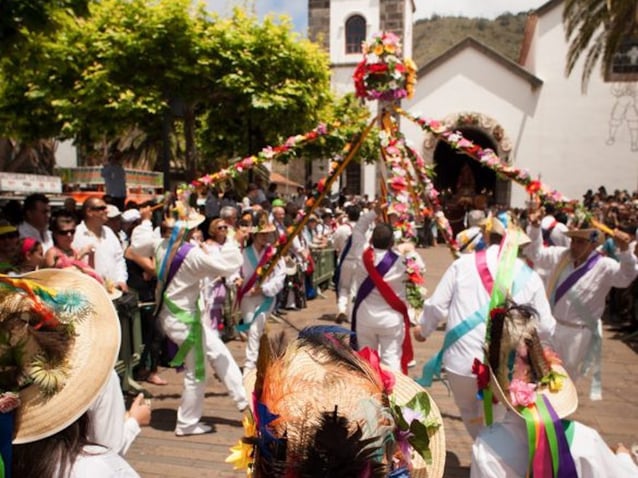
If you chose to buy a property in Tenerife because you’re fascinated by the cultural identity of this incredible European island, you probably know that Carnival in the Canary Islands is more than a party: it’s a collective expression of identity, history and community creativity. It comprises a set of traditions that go far beyond the internationally renowned and large-scale festivities of Santa Cruz de Tenerife. Between February and March, depending on the lunar calendar, every corner of the islands is transformed into a stage where the past and the present communicate with one another.
As an example, in Abama’s municipality, Guía de Isora, this dialogue takes the form of a unique celebration revived to highlight the most critical and satirical aspects of Carnival. The tradition was brought back to life by a group of young locals who later formed the Asociación Sociocultural Guerguera, which will mark its tenth anniversary in 2026. Far from the main parades and stages, this festival preserves the oldest and most deeply rooted spirit of the Isoran Carnival. Here is the curious story of the Quema de El Lucas.
A carnival of satire and critique
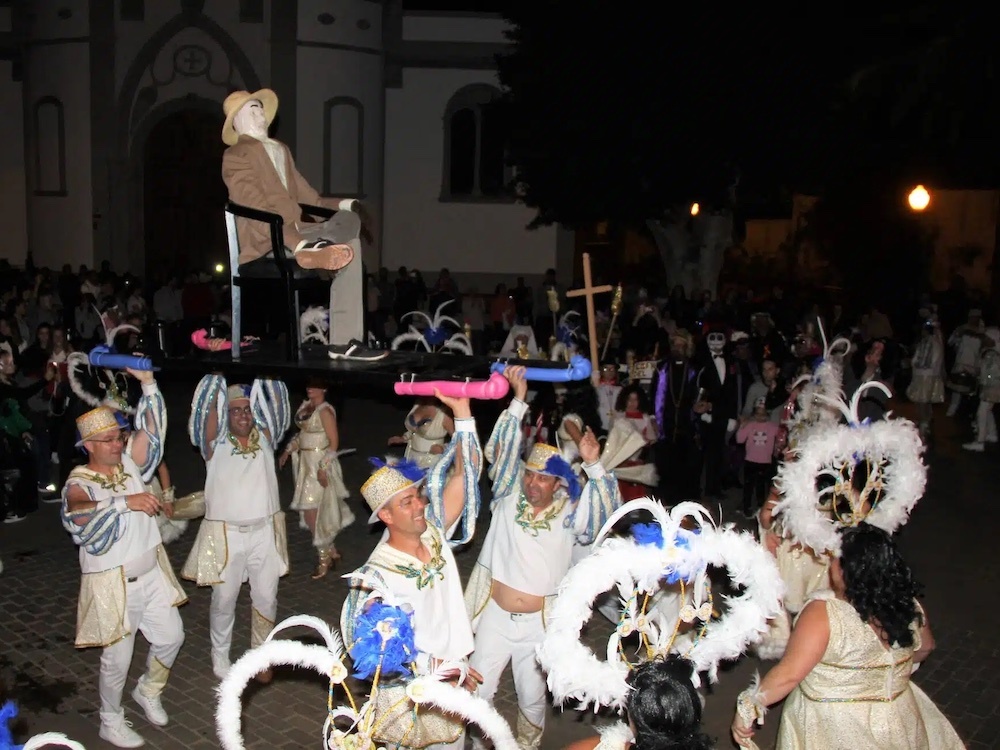
El Lucas is a figure that represents an immoral friar, Fray Lucas, a popular eighteenth-century character known for his misdeeds. In this tradition unique to Guía de Isora, a mannequin representing him is burned publicly as a way of symbolically condemning his sins. This type of festive ritual, combining fire, satire, traditional handicrafts, and community participation, is common across the Mediterranean and the Iberian Peninsula, and in some cases demonstrates marked artistic quality, such as Las Fallas in Valencia.
Made by local residents and dressed in old clothes and recycled items, El Lucas gradually fell into obscurity, displaced by more contemporary and global forms of celebration. It was precisely this loss that prompted a group of young people from Guía de Isora to research, speak with elders in their community, collect historical testimonies, and reconstruct the essence of the celebration and the character while adapting it to modern sensibilities. One of the keys to the success of this revived tradition has been its intergenerational focus. The Quema de El Lucas is not limited to a single day of Carnival: throughout the season, activities like school competitions are organised to encourage children and young people to learn about and embrace this cultural expression, even ultimately letting them decide which version of the mannequin will be brought to the pyre.
For those wishing to experience a different take on Carnival, attending the Quema de El Lucas is an opportunity to discover the authentic Canary Islands, where the celebration is shared rather than simply observed. It’s a cultural experience that allows for a deeper understanding of the island’s history, its people, and its traditions. This tenth anniversary is a true demonstration of how communities that care for their culture create places with soul.
This authenticity is one of the driving inspirations behind the residential community at Abama as well, which is committed to celebrating the cultural identity of Guía de Isora and the island. Buying a property in Tenerife, whether as a home, an investment or for long stays, means becoming part of a long story that continues to be written. This year, plan a visit to meet the “wicked” Lucas and take part in this ritual, where fire symbolically leaves the negative behind and allows us to embrace what makes us better.