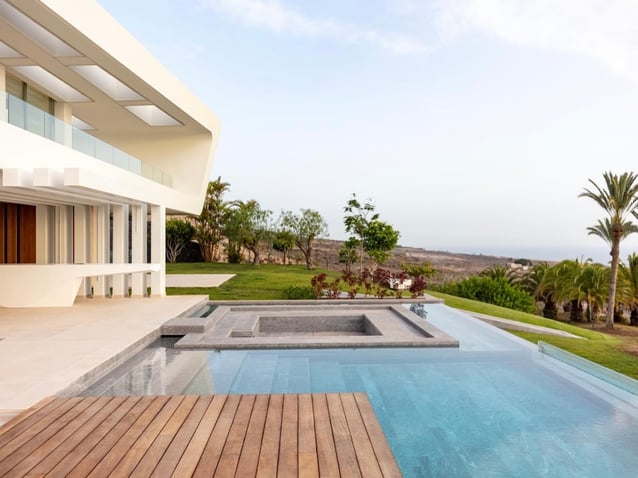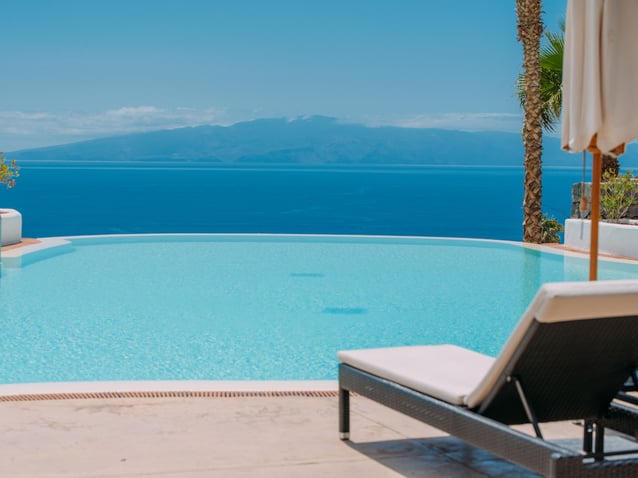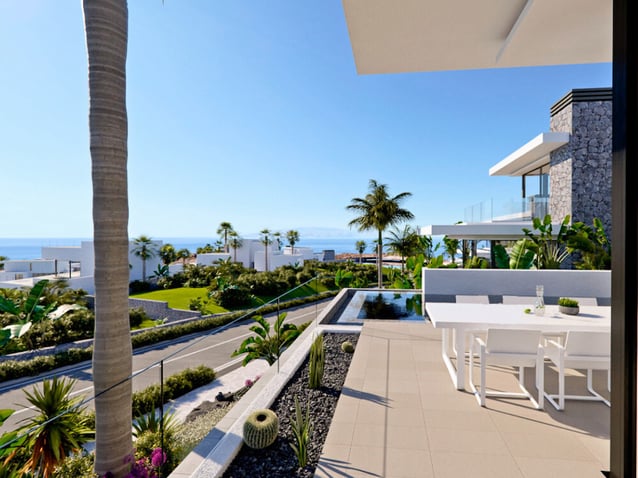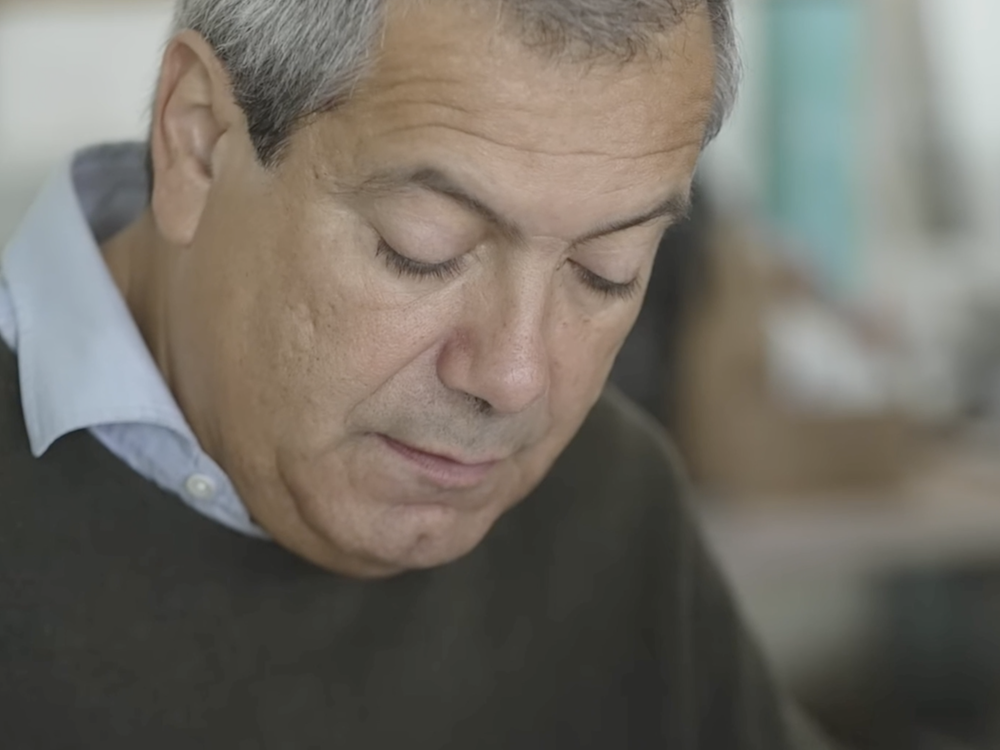
Like his architecture, in which every volume and every space is imbued with meaning, Manuel Aires Mateus’s words are measured and precise, the result of a unique vision in which architecture is an art that transforms life. Chosen to design the newest community within Abama Resort, Aires de Abama, his vision aligns perfectly with the philosophy of a residential project that was born and has grown in close harmony with the unique landscape of Guía de Isora in southern Tenerife. Setting out to “design little houses overlooking the ocean,” this architect - a recipient of Secil and FAD awards and a multiple nominee for the Mies van der Rohe Award - has taken on “a unique development that brings together everything that defines Tenerife: the topography, the ocean, and the land.”
“What stayed with me most about Tenerife when I first visited was, of course, that it’s an island…the impression of being surrounded by the ocean. Then there’s the volcanic stone and the unique topography, which is very important. And finally, its size: it has a very intimate and human scale,” he shares, while discussing the project he is developing in collaboration with Mexican interior designer Alejandro Escudero.
Trained at the U.T.L. School of Architecture and practicing professionally from an early age with Gonçalo Byrne, Aires Mateus slowly turned the discipline of architecture into a way of looking at the world. In 1988, together with his brother Francisco, he founded his firm, which uses geometry, memory, and empty space to create its own language. “Architecture is an art, but it is an unfinished art: one that is only completed by life. Painting and sculpture create finished works, but architecture requires people to complete it. It is an art in suspense, designed for life,” he reflects.
Aires Mateus’s work, which has been recognized with international awards and honors, does not seek to impose itself on the landscape but rather to reveal it; in his work, volumes engage in a dialogue with the land, and each space aspires to come into being and transform itself, drawing strength from the passage of time. This vision has manifested itself in residences, cultural facilities, and public buildings, and finds a happy home at Abama, where the resort’s philosophy naturally aligns with his principles. “What impressed me most about Abama—aside from the hotel, which is very open, lively, and interesting—is how well each structure relates to nature. The gardens, the landscaping…everything works very well together; there’s continuity among everything that’s been built. It’s a truly striking quality,” he concludes.
Homes Overlooking the Ocean
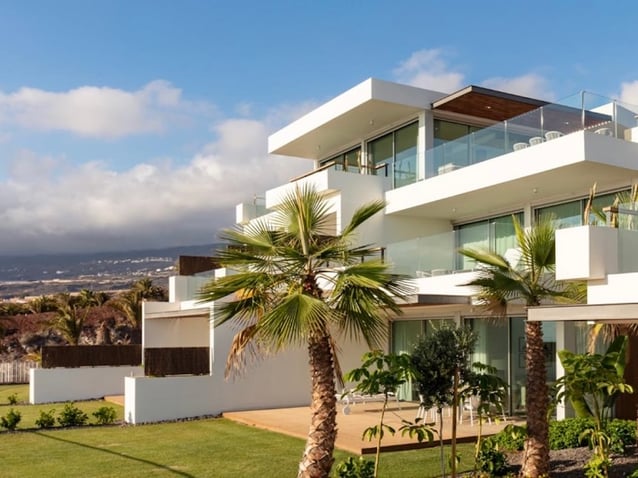
Aware of the role that Aires de Abama plays as the culmination of a residential development that draws inspiration from the landscape, Aires Mateus approaches the project as a return to his roots: “I think it’s wonderful that, as a way to bring the grand concept of Abama living to a close, we’re returning to a smaller scale—that of a village,” he notes when explaining the key aspects of the design. “As a studio, we were drawn to this idea of returning to early history. We looked how the first settlements on this island were built: simply, with houses side by side. This was the initial inspiration.” His other projects, which include the Day Center in Grândola (Portugal), the Cantonal Museum of Photography (MUDAC) in Lausanne (Switzerland), and the Faculty of Architecture in Tournai (Belgium), share the commonality of design that draws from its surroundings. In the case of Abama, “The elevation and the topography help us a great deal, allowing Aires de Abama to be a cluster of homes, some ajoining one another and some overlooking others, but all focused on the ocean,” he states.
For Aires Mateus, in the design phase of the development, the major shift derived from transforming the concept of an “apartment” into that of a “villa.”
“All the homes face the ocean because that is the privilege of this island, and its most significant treasure. We’ve worked under the concept of creating individual homes facing the ocean, with their own gardens and entrances. We want residents to feel they can touch both the ground and the sky; and that the space between the sky and the earth belongs to them. It’s very related to the natural scale of this place. We’re creating spaces within the walls, using the topography of the island, its stone and its colors. We want to bring nature into the interior of the homes, to find a connection between nature and what we build,” he explains.
To achieve this, the choice of materials and their dialogue with the surrounding environment is crucial. “The feeling of these structures will be warm; we want to use materials that are authentic and that time will help refine. As they age, they are enhanced. And we want to work with the tones that are native to Tenerife: the stone, the trees…”
Alongside this dialogue between architecture and nature, for Aires Mateus, this project exudes a certain sense of refuge. “I want the people who live in these homes to feel deeply connected, in a more human way. We’re living in increasingly globalized and complex environments. Here, we want to achieve the opposite, through a small scale and a different pace.”