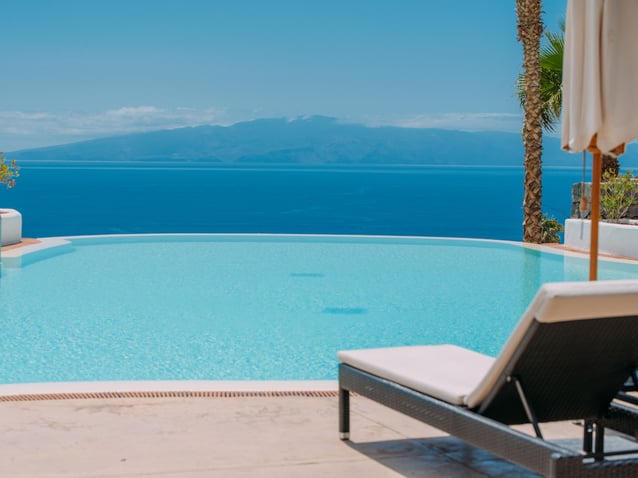
There are ocean views, and then there are extraordinary views. Abama Resort's luxury residences in Tenerife enjoy the latter. From their terraces, the Atlantic is not simply a horizon, but a living landscape of deep blue, ever-changing movement. Beneath its surface lies one of Europe’s most remarkable marine environments, spanning the municipalities of Buenavista del Norte, Santiago del Teide, Guía de Isora, Adeje and Arona, and supporting an extraordinary diversity of marine life, much of it thriving just beyond sight.
In this article, we take a closer look at the remarkable world beneath the surface of the Atlantic that Abama owners enjoy every day, a marine environment that has also become central to the Resort's commitment to sustainability. In 2024, Abama Resort celebrated this extraordinary ecosystem with the publication of the book Abama Blue Ocean. Directed by renowned underwater photographer and filmmaker Francis Pérez, the project brought together Pelagic Life, the Tonina Association, and leading marine researchers from the University of La Laguna and the University of Las Palmas de Gran Canaria to showcase both the beauty of these waters and the importance of protecting them.
The seabed: reefs, sands and volcanic caves
The richness of the Teno-Rasca Marine Area lies below the surface. Shaped by Tenerife's volcanic origins, the seabed is a dramatic landscape of rocky reefs, deep underwater valleys and hidden caves that create one of the most varied marine environments in Europe.
Closer to the surface, where sunlight reaches the seabed, forests of Cystoseira and Sargassum algae sway with the currents. Nearby, broad seagrass meadows of Cymodocea nodosa provide shelter, breeding grounds and food for countless fish and invertebrates, making them one of the most important habitats in the local ecosystem.
Further below, where daylight fades, submerged volcanic caves reveal a completely different world. Sponges, corals and other marine invertebrates thrive on their walls, while crustaceans and nocturnal fish retreat here during the day before emerging after dark.
Fish: more than 350 species in a single area
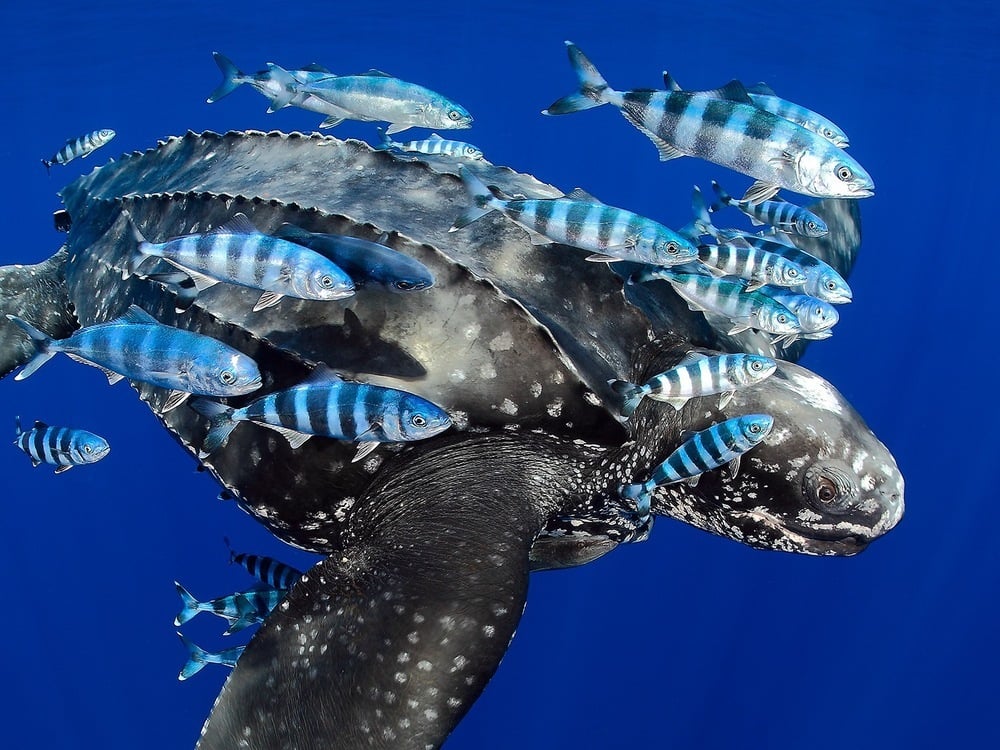
The waters of the Teno-Rasca Marine Area are among the richest in the eastern Atlantic, with more than 350 recorded species of fish. From the elegant trumpetfish, almost invisible as it drifts among the rocks, to the vividly patterned scrawled filefish and the curious burrfish, which inflates itself when threatened, every dive reveals something different. Shoals of blue runner sweep through open water, while countless other species move between reefs, seagrass meadows and volcanic caves.
It is this extraordinary variety of habitats that makes these waters so exceptional. Every reef, meadow and underwater cavern provides its own niche, creating one of the most diverse marine ecosystems in Europe.
Turtles: priority species at risk of extinction
The waters off Abama are an important sanctuary for several species of marine turtle. The loggerhead turtle, instantly recognisable by its warm reddish-brown shell, spends part of its early life feeding in the Canary Islands after crossing the Atlantic from nesting beaches in the Americas and Cape Verde. Green turtles are also regular visitors, drawn to the extensive seagrass meadows that provide their favourite food.
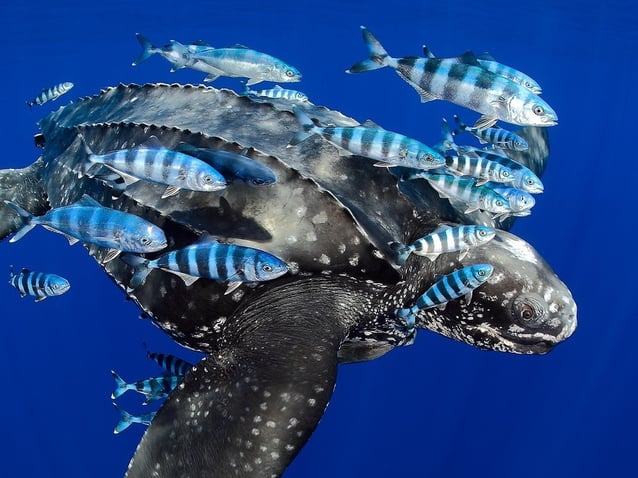
Every so often, even rarer guests appear. Hawksbill turtles and the magnificent leatherback, the largest sea turtle on Earth, are occasional visitors to these protected waters, a reminder of the extraordinary marine life that thrives just beyond the shoreline.
Cetaceans: the global capital of the short-finned pilot whale
According to Mission Blue, the ocean conservation organisation founded by renowned oceanographer Sylvia Earle, Teno-Rasca is the home of the largest known resident population of short-finned pilot whales anywhere in the world. It is a distinction that gives these waters tremendous scientific and conservation importance.
Perhaps the greatest wonder of this ecosystem is what lives within it. The calm, warm seas off southwest Tenerife, together with deep ocean lying close to the coastline, create ideal conditions for whales and dolphins throughout the year.
As many as 22 different species of cetacean have been recorded in the Teno-Rasca Marine Area, making it one of the richest marine environments of its kind in Europe. Bottlenose dolphins and short-finned pilot whales are permanent residents, meaning they are present beneath the waters surrounding Abama at any time of year.
Abama’s commitment to the ocean
Abama Resort has long recognised the uniqueness of this environment. In connection with the publication of Abama Blue Ocean, the resort hosted a meeting between Max Bello, Director of Public Policy at Mission Blue, Ana Dorta, Mayor of Guía de Isora, and Rosa Dávila, President of the Cabildo de Tenerife, to explore opportunities for the protection and sustainable management of the Teno–Rasca Marine Area.
From these discussions, several practical initiatives have emerged, including plans for a marine interpretation centre in Guía de Isora and closer cooperation between public institutions and private companies. Mission Blue is also considering the designation of the area as a Hope Spot, an international recognition given to marine environments of exceptional ecological value that require long-term protection. As Max Bello notes, “we cannot do everything, but everyone can do something.” Abama has chosen to contribute in a tangible way.
The wonders of the ocean surrounding Abama Resort’s luxury properties in Tenerife are not a photo opportunity: they are a living reality, documented and internationally recognised. To understand the resort is also to begin to explore the remarkable ocean that surrounds it. To arrange a visit, please contact our team. The Atlantic, like Abama, is best experienced in person.
Photographic credit: Abama Blue Ocean